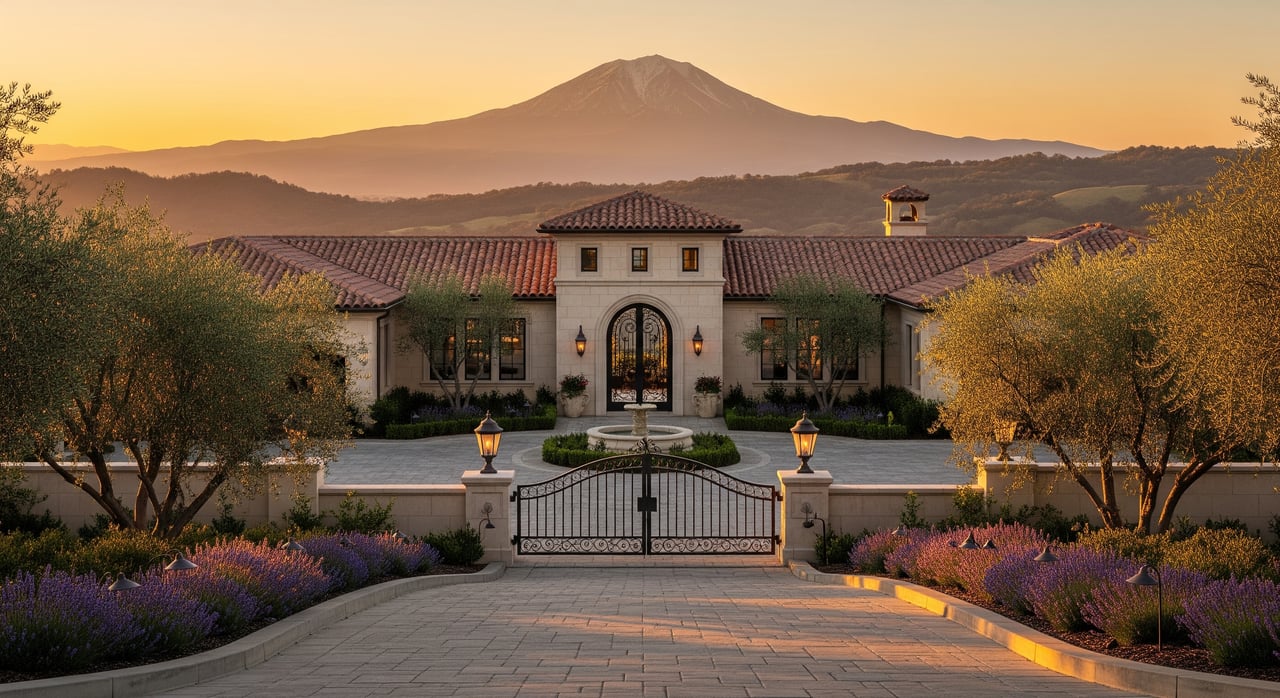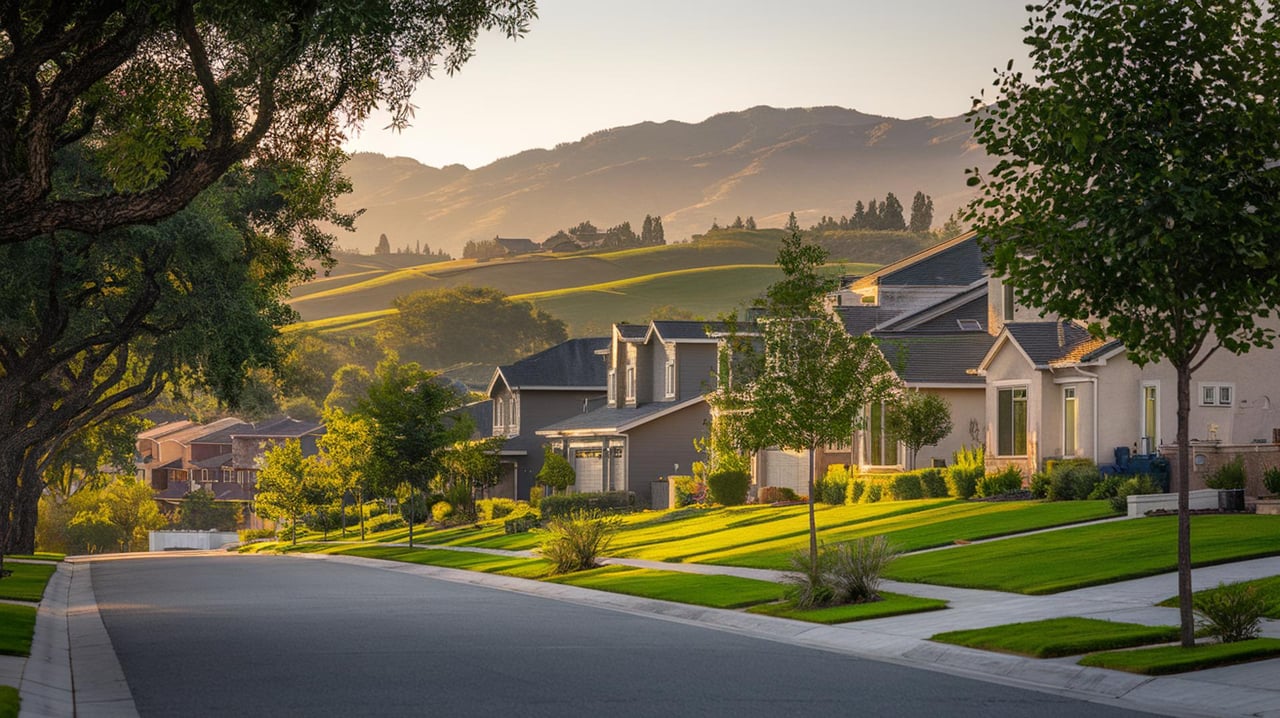
The listing says steps to the club. The disclosure packet lists an HOA fee. Nowhere in either document does it say whether that fee, or that house, comes with a tee time.
That gap catches more buyers off guard in Danville's three prestige gated enclaves than almost any other detail in the transaction. Blackhawk, Diablo, and Crow Canyon Country Club each pair a residential HOA with a private club, and in every one of them, the HOA and the club are separate organizations with separate applications, separate fees, and separate waiting lists. Buying the house gets you the gate, the architecture, the roads, and the address. It does not automatically get you the golf course.
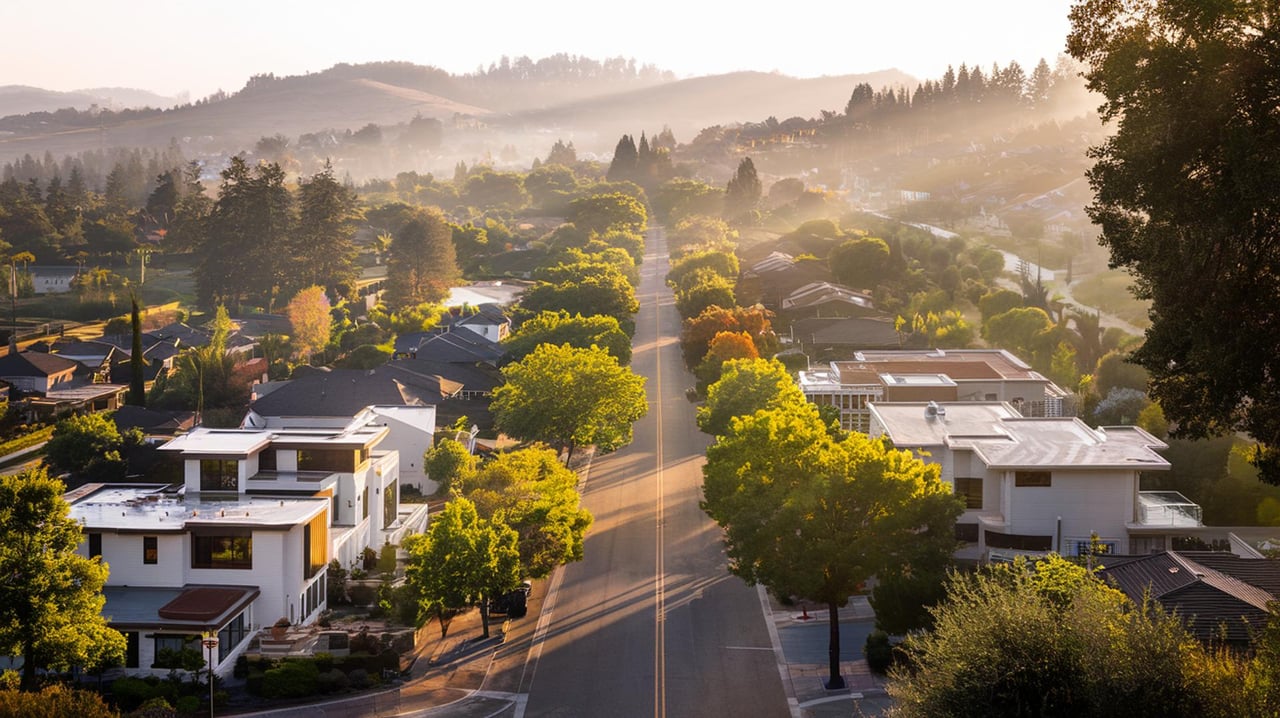
If you're comparing these three communities as part of a move into the San Ramon Valley, that separation is the mechanism worth understanding before you write an offer, not after you close.
Three Communities, One Rule
Blackhawk is the largest and most structured of the three: a 2,027-home, HOA-governed planned community with four gated entrances and more than 26 miles of private roads, built across six sub-communities known as Hidden Oaks, Oakridge, Saddleback, Silver Oak, Silver Maple, and Blackhawk Country Club itself. The HOA runs the gates, the common landscaping, and an Architectural Review Committee that signs off on exterior changes. Blackhawk Country Club, with its two 18-hole championship courses, is a different entity entirely. Membership there is limited and sponsor-based, split into Golf, Tennis, Sports Complex, and Social tiers, and homeownership inside the gates does not put you on the roster.
Diablo runs the same script with a different backstory. Diablo Country Club, founded in 1914, is one of the oldest clubs in California and was once a retreat for San Francisco's social elite. The neighborhood around it is unincorporated Contra Costa County land governed not by a city hall but by the Diablo Community Services District, a special district formed in September 1969 with a five-member elected board. DCSD maintains the roads, culverts, and bridges, keeps up Kay's Trail, and contracts with the county sheriff for security. None of that touches club membership, which is its own application process open to residents and non-residents alike.
Crow Canyon Country Club, in the southeastern corner of Danville, tells the story a third way. It's a gated development from the mid-1970s built around a private 18-hole course, but the housing stock is a genuine mix of townhomes, patio homes, and single-family residences rather than a uniform run of custom estates. The mix means more flexibility in price and upkeep, and it means the club-versus-HOA distinction shows up here too, just against a more varied backdrop of home types.
What the Money Actually Buys
Here's where the separation shows up in dollars.
At Blackhawk, HOA dues across the sub-associations typically run $200 to $600 a month as of early 2026, covering the gates, the roads, and the shared open space. That's a completely different line item from club dues, which are handled through Blackhawk Country Club's own application and fee schedule. A 4 to 5 bedroom home in good condition on a standard lot trades in the $1.8 million to $2.8 million range, with golf-course frontage or panoramic views commanding a real premium above that. Recent listings show just how wide the spread runs inside one set of gates: a single-story Tennis Club Villa at 2,052 square feet listed around $1.699 million, while larger custom homes ranging from roughly 2,608 to 5,732 square feet have listed between $2.75 million and $4.288 million.
Diablo's numbers are harder to pin down, and that difficulty is itself the story. As recently as October 2025, Redfin listed Diablo's median sale price at roughly $2.2 million. That figure was already unstable by the time it published, because Diablo trades in such low volume that a single large sale can move the monthly median by seven figures. In a recent one-month stretch, Redfin's own data showed only two homes sold in the entire community. Treat any published Diablo median as directional, not diagnostic. The number that matters more is the comp on a specific street, checked against a specific lot and a specific renovation history, not a citywide average built on a handful of closings.
Crow Canyon sits at the other end of the accessibility spectrum. As of mid-2026, homes in Crow Canyon Country Club Estates carried the lowest neighborhood median in Danville, in the neighborhood of $1.58 million, making it the most attainable version of gated, golf-adjacent living the town offers. The tradeoff is the mixed housing stock. You're shopping townhomes and patio homes alongside single-family homes, which means comping a property here takes more care than in a neighborhood of uniform product.
| Community | Governing structure | Club status | Typical price signal |
|---|---|---|---|
| Blackhawk | HOA across six sub-communities, four gated entrances | Sponsor-based membership, separate from HOA, tiered by Golf/Tennis/Sports/Social | $1.8M–$2.8M standard 4-5BR; villas from ~$1.7M, estates to $4.29M+ |
| Diablo | Diablo Community Services District (public special district, formed 1969) | Separate club application, open to residents and non-residents | ~$2.2M median as of Oct. 2025, unstable due to low sales volume |
| Crow Canyon | HOA, gated since mid-1970s | Private course, mixed housing type | ~$1.58M median as of mid-2026, most accessible of the three |
Why the Premium Is Getting Louder Right Now
Diablo Country Club completed a $41 million master facilities renovation with a grand reopening in June 2024, an event that drew more than 700 members and guests. The rebuilt clubhouse touched the Red Horse dining room, added a 21-and-older Mt. Diablo Pub, opened a ground-floor fitness center, installed four permanent bocce courts, and put in an indoor golf simulator. That kind of capital investment changes what "steps to the club" actually means in a listing description. A seller marketing proximity to a facility that was a construction site two years ago is marketing something real, and it should be argued specifically in the listing narrative rather than assumed as a flat number added to the asking price.
The same logic applies at Blackhawk, where golf-course frontage and view lots have always carried a premium over standard-lot homes inside the same gates. The premium is for the setting. It is not, by itself, a membership.
What to Confirm Before You Write the Offer
A short list of questions, asked in this order, will save you a surprise after closing:
- Is club membership optional or required for this specific address, and if optional, is there a waitlist right now?
- What are the current initiation fees, monthly or annual dues, and any transfer rules if membership is being sold alongside the house?
- Are HOA dues and any sub-association assessments separate from club dues, and what do each actually cover?
- In Diablo specifically, is the property on public sewer or septic, and what's the status of any private-road maintenance agreement for the access lane?
- For hillside or wooded lots in any of the three communities, what will wildfire insurance actually cost, and can you get a bindable quote during the inspection period rather than after?
None of these questions are unusual to ask. They're just easy to skip when a house shows well and the market is moving fast, and skipping them is exactly how a buyer ends up owning a home a hundred yards from a golf course they can't play.
The Comparison Buyers Skip
Most people cross-shopping Blackhawk, Diablo, and Crow Canyon are really deciding how much structure they want built into daily life. Blackhawk offers the most organized version, with HOA governance, architectural review, and a defined social calendar layered on top of the club. Diablo offers the least structure and the most privacy, unincorporated and governed by a small elected board rather than a city department, with large lots and long driveways that create a quieter, more spread-out feel. Crow Canyon splits the difference, gated and golf-oriented but with more variety in home type and a lower entry price than either of the others.
None of the three is more correct than another. The point is that the decision runs deeper than square footage and school assignment. It runs into governance, into what a fee actually pays for, and into how thin a market has to be before its published median stops meaning much of anything.
If you're weighing these enclaves against each other, or against a non-gated address elsewhere in the San Ramon Valley, that's a conversation worth having with someone who tracks these distinctions street by street rather than headline by headline. Brad Gothberg has spent more than three decades working this exact stretch of Contra Costa County and can walk you through what a specific address inside any of these gates is really priced on. Request a confidential market valuation before you write your next offer, not after.